

Where do you start when buying a hearing aid?
Choosing a hearing aid starts with a diagnosis. During your visit the specialist determines the type and degree of hearing loss with pure-tone audiometry, a simple test that needs no preparation and takes about 20 minutes.
Types of hearing aids
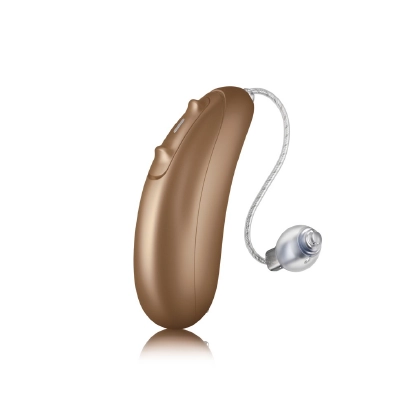
Receiver-in-canal (RIC) hearing aids
The main part of this hearing aid, the receiver, sits in an ear tip inside the ear canal. From the outside only a thin transparent tube and a small, unobtrusive unit behind the ear are visible. These aids compensate effectively for mild to severe hearing loss.
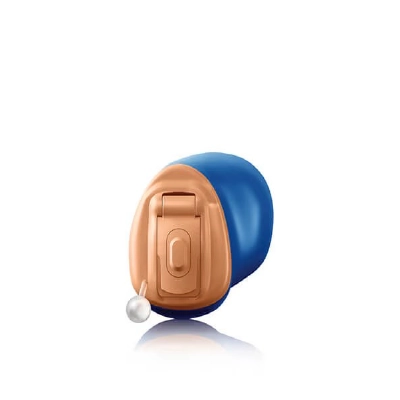
In-the-ear (ITE) hearing aids
These devices have a small shell that fits inside the ear canal, so they are almost invisible when worn. Each one is made individually, because every ear has a unique shape.
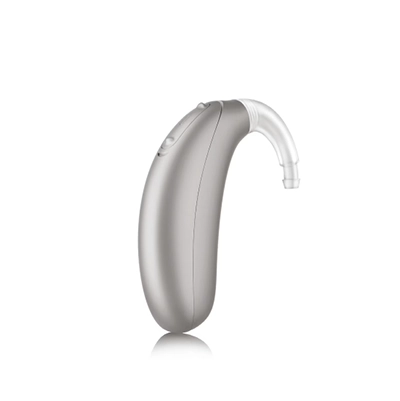
Behind-the-ear (BTE) hearing aids
These consist of a custom ear mould and a unit that sits behind the ear, connected by a sound tube. A modern BTE aid is compact and can correct any degree of hearing loss, except where an implant is recommended.
Rechargeable hearing aids or battery-powered?
RIC, BTE and ITE hearing aids come in two versions: with replaceable batteries or with a built-in rechargeable battery. The type of aid does not decide this for you. Choose according to your lifestyle and needs.
Rechargeable hearing aids
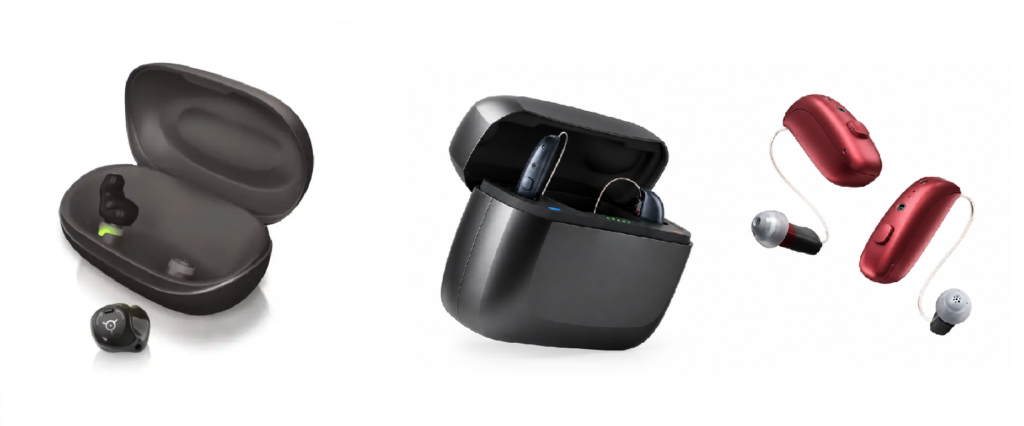
Rechargeable hearing aids have a built-in battery, so there are no batteries to keep replacing. Usually you simply place the aids in their charging case or dock overnight, and in the morning they are ready to use.
Advantages:
- No batteries to buy, store or replace.
- Convenient every day: charge in the evening, put on in the morning.
- Especially handy for people with poorer eyesight or less nimble fingers.
- A good choice for those who mostly sleep at home and have a fixed place to charge the aids.
- Less fuss in daily hearing-aid care.
Disadvantages:
- You must remember to charge the aids in time.
- When travelling you need to take the charger or charging case.
- Over the years the battery capacity gradually declines, as with any rechargeable battery.
- If an aid runs completely flat and there is nowhere to charge it, you cannot simply pop in a new battery.
Hearing aids with replaceable batteries
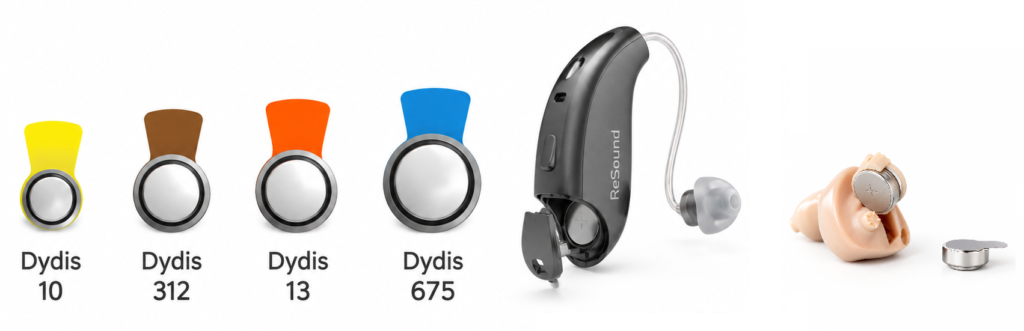
A practical choice for those who want to be independent of mains power and able to change a battery quickly at any time.
Advantages:
- When a battery runs out, you replace it straight away and carry on using the aid.
- Convenient when travelling: no need to look for a socket or carry a charger.
- With spare batteries you are ready for any situation.
- No waiting for the aid to charge.
Disadvantages:
- You need to keep spare batteries to hand.
- Batteries have to be replaced and inserted correctly.
- Over time the batteries add up to an extra cost.
- The small batteries can be awkward to change for people with poorer eyesight or less nimble fingers.
Which option should you choose?
Replaceable batteries may suit people who travel often, want a spare power source always to hand or do not want to depend on mains power.
Rechargeable hearing aids are often especially convenient for people who spend most of their time at home, have a fixed place to charge the aids or, because of poorer eyesight or dexterity, would rather not deal with changing tiny batteries.
Both options are comfortable and suitable for everyday use. What matters most is choosing according to your lifestyle, habits and individual needs.
State reimbursement for hearing aids
We have a contract with the National Health Insurance Fund (VLK). Anyone covered by compulsory health insurance can receive reimbursement for hearing aids:
- See an ear, nose and throat (ENT) doctor, who assesses your hearing and prescribes the reimbursement.
- Come to our centre with the referral.
- We advise you, help you choose and fit the hearing aids professionally to your individual needs.
Any questions about reimbursement? Give us a call and we will explain every step.
Free trial
You can try the selected hearing aids free of charge: at home, at work, with family and friends. You decide only once you are sure everything suits you.
Brands we offer
 Unitron (Switzerland)
 ReSound (Denmark)