

Good hearing is one of nature’s priceless gifts. The hearing system is among the most complex in the body: from the outside we see only the outer ear, while all the essential parts are hidden inside.
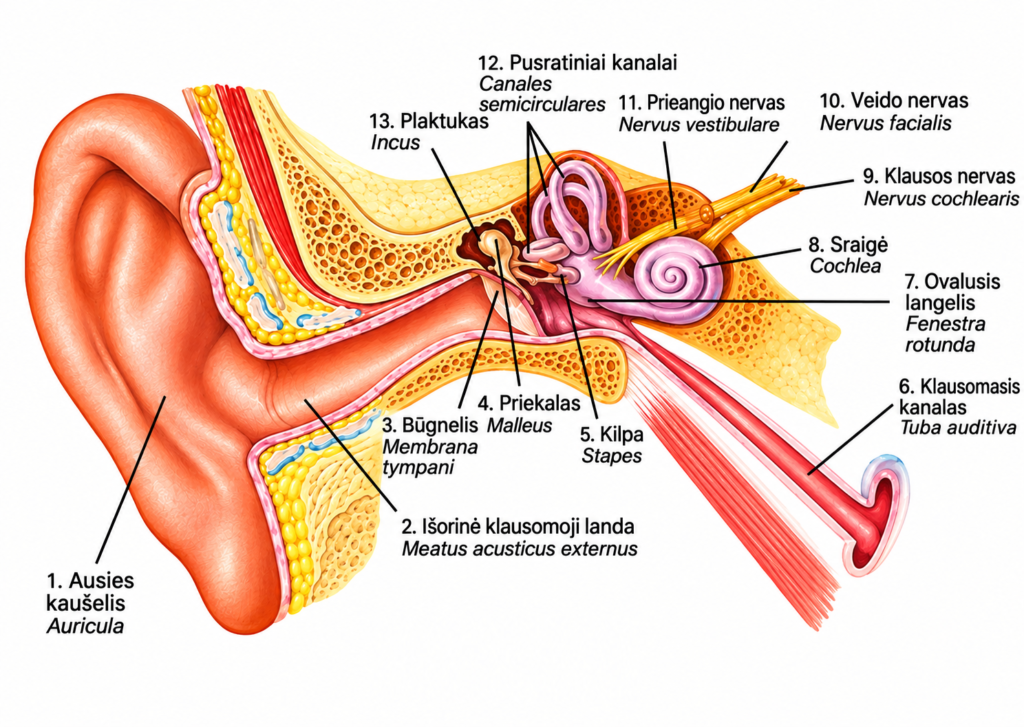
What does the hearing system do?
- It picks up vibrations in the air and turns them into electrical impulses that are sent to the brain.
- It controls balance and, together with vision, tells us where the body is and how it is moving in space.
- It keeps us connected to the world around us.
A sound wave travels through the ear canal and the middle ear into the inner ear, the cochlea. It is in the cochlea that physical vibrations become electrical impulses. These travel along the auditory nerve to the hearing centres of the brain and on to the cerebral cortex, where the information is processed.
How do we hear?
The organ of hearing and balance, the ear, is a complex system of several parts responsible for perceiving sound and coordinating movement. The main task of the hearing organ is to pick up a sound signal and convert it into a nerve impulse. The balance organ determines the position of the body in space.
The hearing organ has three parts:
- The peripheral part picks up sound waves and turns them into nerve impulses. It includes the outer, middle and inner ear.
- The conductive part is the auditory nerve, which carries the impulses to the brain.
- The central part is the area of the cerebral cortex that analyses the sound signal.
Damage to any one of these parts can weaken hearing or cause it to be lost altogether.
Why does hearing decline?
Some people are born with a hearing impairment or develop one through heredity or congenital infections. Acquired hearing loss most often has the following causes:
- Frequent middle-ear infections, ear, nose and throat conditions and viral infections.
- Side effects of certain medicines (ototoxic antibiotics, tuberculosis drugs, platinum-based preparations). Hearing should be monitored while taking them.
- Metabolic disorders such as diabetes and kidney disease.
- Injuries to the head, neck or spine.
- Noise damage from long exposure to loud environments (industry) or to intense sound sources such as explosions, sirens and loudspeakers.
- Natural age-related changes, the most common cause of hearing decline in later life.
Can hearing loss be prevented?
Following simple precautions helps keep hearing healthy. Avoid listening to loud music for long periods. At concerts and stadiums, keep away from the speakers. Use earplugs or protective earmuffs when working in noisy environments. Keep up with vaccinations and hygiene.
One important point: when hearing fades gradually rather than suddenly, we often do not notice it. That is why regular check-ups with a specialist, at least once a year, are essential. If your hearing worsens suddenly, you struggle to understand speech, or you notice noise or pressure in your ears, see an audiologist or ENT doctor without delay. The sooner you act, the better the chances of preserving your hearing.
We carry out diagnostic hearing tests for adults at our centre at Laisvės pr. 60, Vilnius. The test is free.
Hearing-care specialists
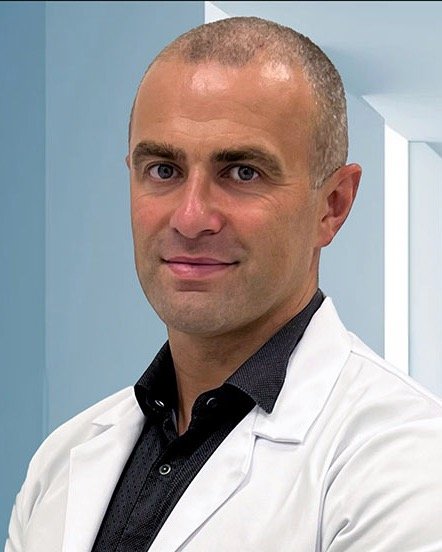
Valdemaras Dubickis
Hearing-care specialist
Carries out hearing tests, selects and fine-tunes hearing aids and advises on state reimbursement. Takes time with every client and explains everything in plain language.
Book with this specialist
Vaida Rubežiūtė
Hearing-care specialist
Helps you choose hearing aids and get used to them, and looks after fine-tuning and ongoing care. Clients value her attentiveness and patience.
Book with this specialist